

 Current position > News detail
『Glycerol flowmeter』Related information(v cone flow meter|rotary gas meter|gallon meter|gear meter|metal tube rotameter|glass tube rotameter|nutating disk meter|transit time ultrasonic flow meter|wedge flow meter|pd meters|hydraulic flow meter|ultrasonic water flow meter|water flow meter|air flow meter|magnetic water flow meter|oxygen flow meter|gas flow meter|argon flow meter|air velocity meter|gasoline flow meter|fuel flow meter|ultrasonic water meter|digital water meter|nitrogen flow meter|solid flow meter|Oxygen tank flow meter|digital water flow meter|diesel fuel flow meter|steam flow meter|02 flow meter|compressed air flow meter|oil flow meter|liquid flow meter)
1. Fuji Electric FLD-1 Portable Ultrasonic Flow Meter Manual: [4]
The core content of the "Fuji Electric FLD-1 Portable Ultrasonic Flow Meter Manual" is as follows:
1. Product Overview Fuji Electric FLD-1 Portable Ultrasonic Flow Meter is a high-precision, non-contact flow measurement instrument suitable for flow detection of liquid media (such as water, oil, etc.). Its core advantages include portability: lightweight design, support for handheld or portable installation, suitable for rapid on-site measurement. Non invasive measurement: without cutting off the pipeline or damaging the flow field, the flow rate is calculated based on the principle of ultrasonic signal reflection. High precision: Measurement error ≤ ± 1%, meeting industrial grade accuracy requirements. Multi functional display: Built in LCD screen, real-time display of flow rate, flow rate, cumulative flow rate and other parameters.
2. Instructions for use: Install and prepare to ensure that the surface of the pipeline is clean, free from rust, paint, or unevenness.
. Select the appropriate sensor model based on the diameter of the pipeline (FLD-1 supports DN15-DN6000mm pipelines). The installation position of the sensor should avoid areas such as valves and elbows that interfere with the flow field. It is recommended that the length of the upstream and downstream straight pipe sections be ≥ 10 times the pipe diameter. Sensor installation using V-method: suitable for small pipe diameters (DN15-DN300mm), sensors are arranged in a V-shape on the same side of the pipeline. Z-method installation: suitable for large pipe diameters (DN300-DN6000mm), sensors are installed on both sides of the pipeline to form a straight propagation path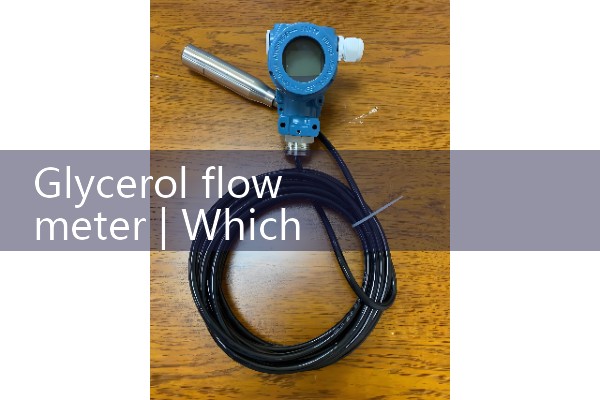
III. Common faults and solutions: No signal or weak signal. Reasons: The sensor is not tightly attached to the pipeline, the coupling agent is insufficient, and there is severe scaling on the inner wall of the pipeline.
. Solution: Apply coupling agent again, clean the surface of the pipeline, adjust the sensor position or pressure. The reasons for large fluctuations in measurement data include unstable fluids (such as turbulence), improper installation of sensors, and interference from pipeline vibrations. Solution: Optimize the installation position of the sensor, increase the length of the straight pipe section, and use shock-absorbing brackets to fix the pipeline. Reasons for exceeding the error limit: incorrect pipeline parameter settings (such as inconsistent pipe diameter and wall thickness), and fluid temperature exceeding the range. Solution: Verify the actual parameters of the pipeline and adjust the settings to c