

 Current position > News detail
『Ultrasonic Flow Meter How It Works: Transit-Time Acoustic Phase Physics』Related information(v cone flow meter|rotary gas meter|gallon meter|gear meter|metal tube rotameter|glass tube rotameter|nutating disk meter|transit time ultrasonic flow meter|wedge flow meter|pd meters|hydraulic flow meter|ultrasonic water flow meter|water flow meter|air flow meter|magnetic water flow meter|oxygen flow meter|gas flow meter|argon flow meter|air velocity meter|gasoline flow meter|fuel flow meter|ultrasonic water meter|digital water meter|nitrogen flow meter|solid flow meter|Oxygen tank flow meter|digital water flow meter|diesel fuel flow meter|steam flow meter|02 flow meter|compressed air flow meter|oil flow meter|liquid flow meter)
Ultrasonic Flow Meter How It Works: Transit-Time Acoustic Phase Physics for Industrial Buyers
Quick Answer: Ultrasonic flow meters with transit-time acoustic phase physics measure the difference in sound travel time between two sensors. That phase shift gives a repeatable flow velocity signal without moving parts. Silver Instruments supplies clamp-on, insertion, and inline transit-time meters for water, seawater, diesel, and clean process liquids.
How Transit-Time Acoustic Phase Physics Works
Two ultrasonic transducers sit on opposite sides of the pipe. One sends a short acoustic pulse downstream. The other sends a pulse upstream. Sound travels faster with the flow and slower against the flow. The meter measures the time difference between the two signals.
The acoustic phase method goes one step further. Instead of only measuring time delay, the electronics compare the phase angle of the received wave. Phase shift is directly proportional to flow velocity. At low flow rates, phase comparison gives better resolution than a simple time counter. This helps on large pipes where average velocity is often below 1 m/s.
In a typical transit-time meter, the time difference is a few nanoseconds at moderate flow. The phase shift can be a fraction of a degree. Modern electronics combine coarse time-of-flight measurement with fine phase detection. The result is stable reading even at 0.1 m/s. That matters on DN200 and larger lines where flow is often low at night.
In practice, clamp-on sensors are common for DN25 to DN200. Insertion sensors suit larger lines from DN200 to DN3000. Inline spool pieces suit small lines from DN15 to DN50 where access is tight or accuracy must be tighter.
There are no moving parts in the flow stream. Pressure drop stays near zero. The meter works with clean liquids that do not contain large amounts of gas or solids. A small number of bubbles below about 2 percent volume can be tolerated. Heavy slurries should use a Doppler ultrasonic flow meter instead.
Key Parameters That Affect Accuracy
Engineers ask about accuracy, repeatability, and pipe conditions. A typical Silver Instruments transit-time meter offers accuracy of ±0.5% of rate when the flow profile is fully developed. Repeatability is often 0.15% or better. For custody transfer or batch control, inline calibration improves uncertainty. For field checks on cooling water, clamp-on models give enough repeatability for trending and leak monitoring.
Pipe material matters. Stainless steel, carbon steel, copper, PVC, and PVDF are easy to work with. Concrete or fiberglass pipes may need special coupling. Provide the pipe material in your inquiry. We often see this missed. A water treatment contractor in Australia once specified a clamp-on meter without telling us the pipe was lined with cement mortar. That changes the acoustic path and requires a different sensor setup.
Fluid temperature and viscosity change sound speed. The meter corrects this automatically when you enter the fluid type or temperature input. For water from 0 to 100 degrees C, sound speed changes a lot. A built-in temperature correction keeps the reading stable. For heat metering, use a model with two PT100 inputs and a flow totalizer with energy calculation.
Straight pipe is also important. A common setup is 10 pipe diameters upstream and 5 diameters downstream. Avoid installing after a partially closed valve or a pump outlet. If you have only 5 diameters upstream, accuracy may drop to ±1%. Tell us your piping layout and we will check the sensor position.
Common Installations and Application Cases
Water and wastewater plants in Southeast Asia use transit-time clamp-on meters to check pump efficiency and line balance. A desalination plant in Oman uses inline transit-time meters on DN150 seawater feed lines. The meters send 4-20 m
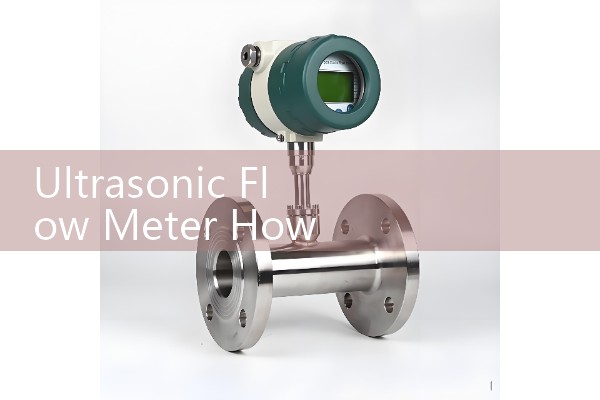
Food and beverage plants often need sanitary connections. Silver Instruments supplies inline transit-time meters with stainless steel 316L spool bodies and tri-clamp ends. A dairy plant in New Zealand uses one on a DN40 CIP return line. The meter has no wetted moving parts. It handles hot water at 85 degrees C and short steam cleaning cycles.
Chemical plants in the Middle East use clamp-on transit-time meters on acid and solvent lines. As long as the liquid is clean and single phase, the pipe wall is not a problem. A distributor in Saudi Arabia keeps handheld clamp-on meters for field service. These units run on battery power and log data for pump audits.
Recommended Selection by Pipe Size and Fluid
For DN15 to DN50 clean liquids, choose an inline spool piece transit-time meter with ceramic transducers. This avoids clamp-on coupling issues on very small pipes. For DN50 to DN300, a wall-mount clamp-on transit-time meter is a good first choice. It installs without shutting down the line. For DN300 to DN3000, use insertion sensors with a hot-tap kit. For temporary checks, a handheld clamp-on meter with rechargeable battery is practical.
For cooling water, boiler feed water, potable water, and demineralized water, choose transit-time. For raw sewage, sludge, or liquids with more than 2 percent solids, choose a Doppler ultrasonic meter. Silver Instruments supplies both types. Tell us your fluid type and particle level so we can recommend the right one.
Output options include 4-20 mA, HART, Modbus RTU, RS485, pulse, and relay. Most customers need 4-20 mA HART for the control system and Modbus RTU for the plant network. Specify both if your PLC supports both.
FAQ: Five Questions Engineers Ask Before Buying
Q: Do transit-time ultrasonic flow meters work with deionized water or diesel?
A: Yes. Transit-time meters do not need conductive liquid. They measure acoustic propagation. Deionized water, diesel, clean chemicals, and seawater all work. Magnetic flow meters need conductivity. This is a key difference.
Q: What accuracy is typical for a clamp-on installation?
A: On a straight pipe with stable temperature and no gas, accuracy is usually ±0.5% to ±1.0% of rate. For inline calibrated spool pieces, accuracy can reach ±0.2% of rate. Clamp-on accuracy depends on pipe roundness, wall thickness, and installation care.
Q: Can a transit-time meter measure compressed air or gas?
A: No. These transit-time liquid meters are not designed for gas. Gas needs different acoustic frequencies and coupling. Use a thermal mass flow meter or vortex flow meter for gas.
Q: How much straight pipe is needed?
A: Standard requirement is 10D upstream and 5D downstream. You can install with less straight run, but the error increases. For a DN100 line, that means 1000 mm of straight pipe before the sensor.
Q: What information should a customer send for a quote?
A: Send pipe size, pipe material, fluid, temperature, pressure, flow range, and output signal. For example, DN100 carbon steel, water, 25 degrees C, 6 bar, 20 to 200 m3/h, 4-20 mA HART. That is enough for model selection.
Contact Silver Automation Instruments
Ask for a fixed price and delivery time. Send your pressure in bar, temperature in degrees C, pipe size in DN, and flow range to Silver Automation Instruments. Tel: +86-135-1213-1526. WhatsApp: 86-135-12131526. WeChat: +86 13512131526. Website: flow-meter.com.au. We support customers in Southeast Asia, Oceania, Latin America, Africa, and the Middle East.