Current position > News detail
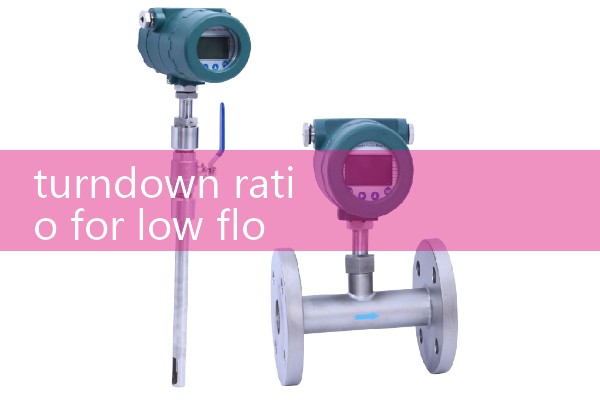
turndown ratio for low flow meter
『turndown ratio for low flow meter』Related information(v cone flow meter|rotary gas meter|gallon meter|gear meter|metal tube rotameter|glass tube rotameter|nutating disk meter|transit time ultrasonic flow meter|wedge flow meter|pd meters|hydraulic flow meter|ultrasonic water flow meter|water flow meter|air flow meter|magnetic water flow meter|oxygen flow meter|gas flow meter|argon flow meter|air velocity meter|gasoline flow meter|fuel flow meter|ultrasonic water meter|digital water meter|nitrogen flow meter|solid flow meter|Oxygen tank flow meter|digital water flow meter|diesel fuel flow meter|steam flow meter|02 flow meter|compressed air flow meter|oil flow meter|liquid flow meter)
 Here is a detailed article on the turndown ratio for low flow meters, approximately 800 words in length.
---
### The Critical Role of Turndown Ratio in Low Flow Metering
In the world of industrial flow measurement, the “turndown ratio” (also known as rangeability) is one of the most critical specifications, especially when dealing with low flow rates. Simply put, the turndown ratio (TDR) is the ratio of the maximum flow rate a meter can accurately measure to its minimum flow rate. It is typically expressed as, for example, 10:1, 50:1, or 100:1. A meter with a 100:1 turndown can accurately measure a flow of 100 liters per minute as well as 1 liter per minute.
For general process flows, a moderate turndown might be acceptable. However, for **low flow meters**—those designed to measure minimal volumes of liquids or gases—the turndown ratio is not just a number; it is the defining feature that determines the meters utility, cost-effectiveness, and overall performance. A meter with a poor turndown ratio in a low-flow application can lead to inaccurate data, wasted product, and costly downtime.
#### Why Turndown Ratio Matters Most for Low Flow
In standard high-flow applications, a flow meter might operate consistently within 50% to 100% of its maximum range. In this scenario, the turndown ratio is less stressed. Low flow applications, however, are notoriously dynamic. A pharmaceutical batch process might require a precise 10 ml/min drip of a catalyst, but during cleaning or startup, the flow may spike to 500 ml/min. Here, the meter must accurately capture both extremes.
The primary challenge at low flow rates is the **signal-to-noise ratio**. At the bottom 10% of a meters range, the physical signal (e.g., vortex generat
 ion, thermal dispersion, or pressure drop) becomes very weak. The mechanical inertia of moving parts or the precision of electronic sensing can be overwhelmed by background noise, friction, or zero-drift. A low turndown ratio (e.g., 5:1) means the meter simply cannot measure the "last drop." The user is forced to either ignore those low flows, losing critical data, or install multiple, expensive meters to cover the full range. This is why a high TDR (often 50:1 or greater) is the holy grail of low flow metering.
#### Key Technologies and Their Turndown Performance
The ability to achieve a high turndown ratio in low flow applications is heavily dependent on the underlying technology:
1. **Coriolis Mass Flow Meters:** These are the gold standard for low flow, high-precision liquid and gas measurement. They operate on the principle of inertia, measuring mass flow directly without being affected by changes in fluid density, temperature, or viscosity. Premium Coriolis meters can achieve turndown ratios of **100:1 or even 200:1** in low flow conditions. This makes them ideal for critical dosing in biotech, specialty chemical injection, and custody transfer of valuable fluids. The trade-off is high cost.
2. **Thermal Mass Flow Meters:** These sensors are excellent for low flow **gas** measurement. They measure heat dissipation from a heated element. Because the physics of heat transfer remains effective even at very low velocities, thermal meters can achieve impressive turndown ratios—often **50:1 to 100:1**. They are a cost-effective solution for low-flow gas applications like aeration, leak detection, and environmental monitoring.
3. **Differential Pressure (DP) Flow Meters:** The classic orifice plate, combined with
『SILVER Official Website SERVICE』
User:rotameter208e6Last Time:07/22/2026