

 Current position > Product detail
『Flow Meter for Corrosive Chemical Service with Teflon Materials: PTFE Sensors』Related information(v cone flow meter|rotary gas meter|gallon meter|gear meter|metal tube rotameter|glass tube rotameter|nutating disk meter|transit time ultrasonic flow meter|wedge flow meter|pd meters|hydraulic flow meter|ultrasonic water flow meter|water flow meter|air flow meter|magnetic water flow meter|oxygen flow meter|gas flow meter|argon flow meter|air velocity meter|gasoline flow meter|fuel flow meter|ultrasonic water meter|digital water meter|nitrogen flow meter|solid flow meter|Oxygen tank flow meter|digital water flow meter|diesel fuel flow meter|steam flow meter|02 flow meter|compressed air flow meter|oil flow meter|liquid flow meter)
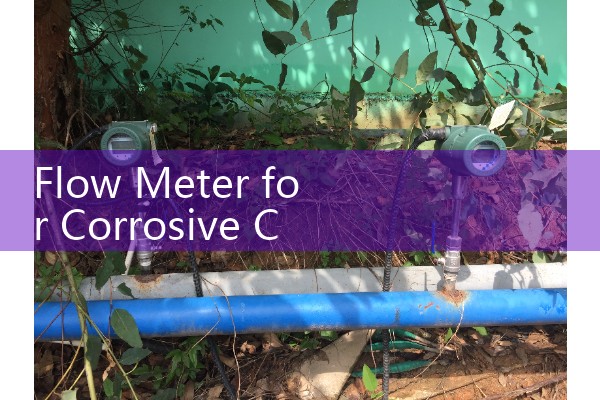
PTFE Flow Meters for Corrosive Chemicals: What Works in the Real World
Quick Answer
For hydrochloric acid, sulfuric acid, sodium hypochlorite, and other aggressive fluids, a flow meter with full PTFE (Teflon) wetted parts and PTFE sensor lining is the safest long-term choice. Silver Automation Instruments supplies electromagnetic flow meters with PTFE liners and PTFE-coated electrodes that handle concentrations from 10% HCl to 98% H₂SO₄ at temperatures up to 120°C. Send us your chemical name, concentration, temperature, and pipe size (DN) and we will return a specific model recommendation same day.
Why Standard Flow Meters Fail Fast in Corrosive Service
Most flow meters die early in corrosive chemical lines because of two silent killers. The first is liner swelling. A rubber or polyurethane liner absorbs the chemical, swells up, and chokes the flow sensor within weeks. The second is electrode corrosion. Stainless steel electrodes in an acidic stream pit and lose conductivity, so the meter starts reading zero or drifting. We have seen this on a customer site in Malaysia where a 316L electrode magnetic flow meter on 20% HCl lasted just three months before the signal became unusable.
The fix is not a coating on top of steel. It is a fully inert wetted path. That means PTFE liner, PTFE-coated or solid tantalum electrodes, and PTFE grounding rings. PTFE resists almost everything except molten alkali metals and elemental fluorine at high pressure. In practice, for 95% of corrosive chemical transfer applications, a PTFE-lined magmeter is the go-to instrument.
Electromagnetic Flow Meters with PTFE Liners: The Workhorse
An electromagnetic flow meter measures conductive liquids by Faraday’s law. The voltage generated is proportional to flow velocity. Two electrodes pick up the signal. If those electrodes are isolated from the chemical or made of corrosion-proof material, the meter survives. That is where PTFE sensors come in.
Silver Instruments builds magmeters with a virgin PTFE liner directly molded into the flow tube. This liner is 3 mm to 6 mm thick depending on line size from DN10 up to DN600. The electrodes can be specified as Hastelloy C, tantalum, titanium, or platinum-iridium, all with a PTFE sleeve that insulates the electrode from the metal pipe. The grounding ring is also PTFE-encapsulated or solid tantalum. This triple barrier means the process fluid touches only PTFE and the electrode tip. Nothing else corrodes.
We have a paint manufacturer in Indonesia who runs 50% NaOH at 85°C through a DN50 PTFE magnetic flow meter. The meter has been in service since 2021 without a single recalibration drift. The key spec they needed was a -25°C to 150°C liner rating with no rubber backing. Pure PTFE handles that range. Liners with PFA backings sometimes delaminate on cooling cycles, but solid PTFE holds shape.
PTFE Sensor Technology Beyond Magmeters
Sometimes the chemical is non-conductive. Acetone, methanol, ethanol, or hydrocarbon-based corrosive fluids will not trigger a magmeter. Here we turn to Coriolis mass flow meters with PTFE-lined tubes. A Coriolis meter measures mass flow directly, independent of conductivity. The standard wetted parts are 316L or Hastelloy, but for corrosive fluids we offer a PTFE coating inside the measuring tubes. This PTFE layer is 0.3 mm to 0.5 mm thick and withstands pressures up to 40 bar.
Last year a customer in Vietnam asked us for a flow meter to measure 98% sulfuric acid concentration flowing by gravity from a tank into a reactor. The acid was non-conductive at that concentration. A magmeter would not work. We supplied a DN15 Coriolis meter with PTFE tube coating. It gives them mass flow in kg/h, density, and temperature, all with no metal contact. The output is 4-20 mA HART, and the accuracy is ±0.2% of reading.
For smaller injection rates where a Coriolis meter is too expensive, ultrasonic flow meters with PTFE transducers are an emerging option. A clamp-on ultrasonic meter with PTFE-faced transducers can handle chemicals through a PTFE-lined pipe wall without wetted parts. But the pipe must be fully filled and the lining must be bonded without air gaps. This is a niche solution for retrofit where cutting the pipe is not allowed.
Material Compatibility Table That Engineers Actually Use
Instead of a generic list, here is what our engineers check before approving a PTFE flow meter for corrosive service. We match the chemical, concentration, temperature, and expected flow velocity. Then we verify the electrode material separately because PTFE only solves the liner problem. The electrode sees the fluid directly.
Sulfuric acid (10% to 80% at <50°C): PTFE liner, tantalum electrodes, PTFE grounding rings. Above 80°C and above 90% concentration, we switch to platinum-iridium electrodes because tantalum corrodes in hot concentrated acid.
Hydrochloric acid (any concentration up to 37% at <100°C): PTFE liner, Hastelloy C electrodes work, but tantalum is safer if iron contamination matters. Tantalum is inert to HCl at all concentrations.
Sodium hypochlorite (5% to 15% bleach):
Phosphoric acid (up to 85% at <80°C): PTFE liner, Hastelloy C or tantalum. Pure PTFE liner is essential because phosphoric acid attacks rubber and EPDM liners.
These pairings come from customer site experience, not only from textbook charts. A desalination plant in Saudi Arabia ran a test with EPDM liner on 30% HCl and saw liner swelling in 48 hours. They switched to PTFE and the same meter body accepted the new liner without issues.
Temperature and Pressure Limits You Cannot Skip
PTFE liners have a temperature ceiling. Standard PTFE handles -25°C to 120°C in continuous service. Above 120°C, PTFE starts to soften and the liner can crack at the flange face. For 130°C to 150°C, we use PFA liners, which are melt-processable fluoropolymers similar to PTFE but with better thermal stability. PFA is also non-stick and corrosion-proof. Silver Instruments offers PFA liners on request for DN25 to DN200 sizes.
Pressure is another boundary. PTFE-lined magmeters typically work up to PN16 or PN25 (16 bar to 25 bar) depending on flange drilling. Above that, the liner can cold-flow under the flange gasket and cause leaks. For high-pressure corrosive lines up to 100 bar, we recommend Coriolis meters with PTFE coating instead of full bore magmeters.
Installation That Prevents Premature Failure
Even a PTFE flow meter fails if you ignore installation. The most common mistake is missing grounding rings. A magmeter needs a path to ground. If the pipe is lined or non-conductive, you must install PTFE grounding rings with a tantalum grounding electrode. Without that, the signal-to-noise ratio drops and the meter shows zero flow even when flow is present. We ship every PTFE magmeter with grounding rings pre-installed and a wiring diagram for the earth connection.
The second mistake is misaligned flanges. If the inner diameter of the pipe is smaller than the meter ID, the PTFE liner can fold inward at the inlet and block flow. Always match the schedule of the pipe to the meter bore. For schedule 80 PVC pipe, specify a meter with matching ID to avoid liner protrusion.
Third, vacuum service. PTFE liners can collapse under vacuum if not properly bonded. We add a vacuum-resistant bonding layer between the PTFE and the steel body for applications below 0.2 bar absolute. Tell us if your process includes vacuum purge cycles.
Output Signals and Hazardous Area Approvals
A PTFE flow meter for corrosive chemicals often needs to go into a Zone 1 or Zone 2 area. Silver Instruments provides ATEX and IECEx certified electromagnetic flow meters with PTFE liners and approved electronics. The standard outputs are 4-20 mA, pulse, RS485 Modbus, and HART. For silo or tanker loading in oil and gas, we often configure a batch controller with two-stage valve control to prevent overfilling when pumping aggressive additives.
A recent delivery to a Nigerian oilfield chemical blending plant used 12 PTFE electromagnetic flow meters on DN25 and DN40 lines. Each meter had integral mount transmitter with ATEX Zone 1 certification, 4-20 mA HART output, and local display. The chemicals ranged from corrosion inhibitors to demulsifiers, all varying in viscosity from 1 cP to 800 cP. Because we selected the correct electrode material per fluid, the client reported zero failures in the first six months of continuous operation.
How to Specify a PTFE Flow Meter in One Inquiry
Most engineers skip this part and then wait days for back-and-forth emails. Here is the thing, we need five data points to return a price and lead time. Fluid name and concentration. Fluid temperature. Pipe size (DN or inch) and schedule. Flow range (min and max in m³/h or L/min). Output signal and area classification if any. Add the cable length between sensor and transmitter if you need remote mount.
Send these details to [email protected] or WhatsApp us at 86-135-12131526. We typically respond within 4 hours during business hours Beijing time. If you need a formal quotation with data sheets and certificates, mention that in the message and we will include ATEX, PED, and material traceability documents.
FAQ: PTFE Flow Meters for Corrosive Chemicals
Can a PTFE magnetic flow meter measure low-conductivity acids like pure sulfuric acid?
No. A magmeter needs at least 5 µS/cm conductivity. For concentrated sulfuric acid or oleum below 5 µS/cm, you need a Coriolis flow meter with PTFE-coated tubes. We supply both types from Silver Automation Instruments and can help you choose based on lab conductivity data.
What is the lead time for a custom PTFE-lined flow meter?
Standard sizes DN15 to DN200 with PTFE liner ship in 10 to 15 working days from our Nanjing factory. Larger sizes up to DN600 take 4 to 6 weeks. Hastelloy or tantalum electrodes do not extend lead time because we stock them regularly for corrosive service.
Is PTFE the same as Teflon
Teflon is a brand name for PTFE resin owned by Chemours.