

 Current position > News detail
『Flow meter for measuring water flow rate』Related information(v cone flow meter|rotary gas meter|gallon meter|gear meter|metal tube rotameter|glass tube rotameter|nutating disk meter|transit time ultrasonic flow meter|wedge flow meter|pd meters|hydraulic flow meter|ultrasonic water flow meter|water flow meter|air flow meter|magnetic water flow meter|oxygen flow meter|gas flow meter|argon flow meter|air velocity meter|gasoline flow meter|fuel flow meter|ultrasonic water meter|digital water meter|nitrogen flow meter|solid flow meter|Oxygen tank flow meter|digital water flow meter|diesel fuel flow meter|steam flow meter|02 flow meter|compressed air flow meter|oil flow meter|liquid flow meter)
1. There are several types of flow meters. Differential pressure flow meters are based on the pressure difference generated by throttling devices (such as orifice plates and nozzles) to measure flow. They have a simple structure and wide application, but have the limitation of large pressure loss and are suitable for conventional fluid monitoring scenarios. two Electromagnetic flowmeter uses Faradays law of electromagnetic induction to measure the flow rate of conductive liquids, with high accuracy and no pressure loss, especially suitable for industrial scenarios with high corrosiveness or particle containing media such as acid, alkali, and mud. three Vortex flowmeter achieves measurement by detecting the vortex frequency generated by the fluid passing through the blocking fluid. It has a wide range and is suitable for a variety of media, including gases, liquids, and vapors. It is commonly used for pipeline monitoring in the energy industry. four The volumetric flow cytometer calculates the flow rate of a fixed volume of fluid, with extremely high accuracy, and is particularly suitable for precise measurement of high viscosity fluids such as oils and syrups. It is commonly used in the petrochemical and food processing fields. five Ultrasonic flowmeter measures flow rate through the difference in propagation speed of ultrasonic signals in fluids. It is a non-contact installation and suitable for large diameter or difficult to contact pipelines, such as water conservancy projects or sewage pipe network monitoring. 2. How to measure water flow rate
The method of measuring water flow rate can be achieved using simple industrial chain tools or professional equipment.
.1. Simple Methods in Daily
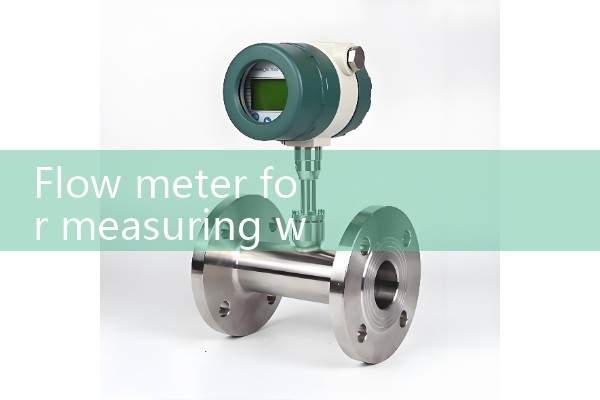
2. Professional and Accurate Measurement Tools 1 Turbine flowmeter: It uses water flow to drive the turbine to rotate and calculate the flow velocity, suitable for pipeline scenarios, with high accuracy but requires the purchase of equipment. two Ultrasonic flowmeter: non-contact measurement, the sensor can be attached to the outer wall of the pipeline to display data, suitable for long-term monitoring in industry or households.
III. Precautions and Techniques - Keep the water flow stable during measurement and avoid fluctuations that may interfere with the results.
. -Taking the average of multiple measurements is more accurate. -Use mobile apps (such as Water Flow Calculator) to assist in calculations, input parameters to automatically generate results.Fourth, extended knowledge: Flow units and applications. Commonly used liters per minute (L/min) for household water use, and cubic meters per hour (m ³/h) for agricultural irrigation.
. For example, garden irrigation typically requires 8-12 L/min, while farmland ditches may require