
 Current position > Product detail
『Water Flow Meter Calibration Services Near Me: Certified Lab Bench Locators』Related information(v cone flow meter|rotary gas meter|gallon meter|gear meter|metal tube rotameter|glass tube rotameter|nutating disk meter|transit time ultrasonic flow meter|wedge flow meter|pd meters|hydraulic flow meter|ultrasonic water flow meter|water flow meter|air flow meter|magnetic water flow meter|oxygen flow meter|gas flow meter|argon flow meter|air velocity meter|gasoline flow meter|fuel flow meter|ultrasonic water meter|digital water meter|nitrogen flow meter|solid flow meter|Oxygen tank flow meter|digital water flow meter|diesel fuel flow meter|steam flow meter|02 flow meter|compressed air flow meter|oil flow meter|liquid flow meter)
Water Flow Meter Calibration Services Near Me: Certified Lab Bench Locators
Quick Answer: A certified lab bench is the most reliable way to verify water flow meter accuracy. Silver Automation Instruments provides factory calibration traceable to national standards and can connect you with accredited partners near your plant. Share your meter type, DN size, and flow range to get a calibration quote or lab recommendation instead of guessing from generic online lists.
Why a Certified Bench Matters for Water Flow Meters
An uncalibrated water flow meter drifts. Residue, erosion, or sensor wear alters the signal over time. In a reverse osmosis plant that bills by cubic meter, a 0.5% drift on a DN200 electromagnetic flow meter can mean thousands of dollars lost each quarter. Calibration on a certified bench compares the unit under test against a master meter or gravimetric system with known uncertainty, typically ±0.1% or better. The reference standard must chain back to an accredited national metrology institute. Without that traceability, a calibration report is just a piece of paper.
Lab Bench Calibration Versus Field Checks
Field checks with a dry calibrator or a clamp-on ultrasonic device give a snapshot. They are useful for diagnostics but do not replace a wet bench calibration under stable Reynolds numbers. A certified lab bench controls water temperature within ±0.2 °C, keeps back pressure above 2 bar to prevent cavitation, and runs five or more flow points from 10% to 100% of Qmax. For a DN50 oval gear meter measuring demineralized water at 40 °C and viscosity below 2 cP, the bench can hold repeatability within 0.03%. Customers often ask us to simulate real process conditions: a brewery in Mexico needed their DN25 turbine meter calibrated with water at 8 °C because that matched their bright tank filling loop. We arranged a partner lab that chilled the test loop and delivered the cert in four days.
How Silver Instruments Locates a Reliable Bench for You
We maintain a direct list of ISO 17025-accredited hydraulic benches across Southeast Asia, the Middle East, Latin America, and Africa. When a dairy plant in Kenya needed a calibration certificate for their DN65 sanitary electromagnetic flow meter, our application engineer checked the meter K-factor, lining material, and electrode type. We then matched them with a lab in Nairobi that had a DN80 master mag meter certified for conductivity down to 5 µS/cm. The whole process, from request to shipped report, took six working days. For meters still under our warranty or supplied by Silver Automation Instruments, we also offer a return-to-factory calibration service on our own gravimetric bench in Nanjing. Typical turnaround is ten days plus courier time.
Parameters You Need to Send for a Firm Calibration Quote
Vague requests delay quotes. A precise enquiry speeds everything up. Here is the minimum data set an accredited lab expects: meter type (Coriolis, electromagnetic, ultrasonic, vortex, oval gear, or turbine), line size (DN15 to DN600), fluid (clean water, wastewater, glycol mixture), normal operating flow rate in m³/h or kg/h, process temperature in °C, operating pressure in bar, and required calibration uncertainty. If you have an electromagnetic meter, add the minimum conductivity value. For a thermal mass meter, share the installation pipe inner diameter and whether the meter has a built-in flow conditioner. Most engineers skip this, but on customer sites we have seen a missing pipe ID cause a 3% mismatch between bench reading and field reading. Send us your pressure (bar), temperature (°C), pipe size (DN), and flow range. We will feed the data into our bench locator tool and return a shortlist of labs with available slots
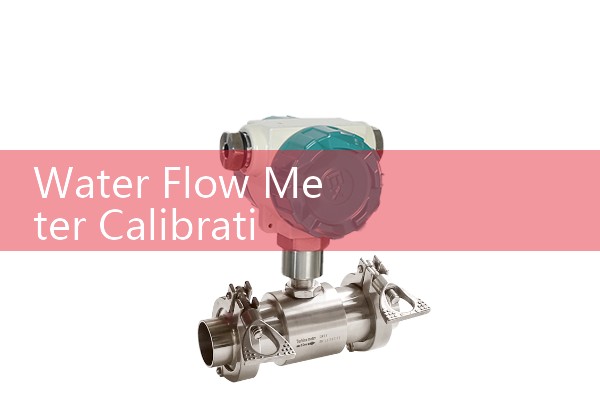
Calibration Bench Capabilities We Verify Before Recommending a Lab
Not every bench can handle all meter types. We screen for the following before we propose a partner. First, Reynolds number range: a bench suitable for a DN300 vortex meter at 30,000 Re may not stabilize at 500 Re for a small positive displacement meter. Second, data acquisition: the lab must sample pulse output, 4-20 mA HART, or Modbus RTU simultaneously and log them against the reference meter with time stamps. Third, temperature stability: the water loop should keep median fluid temperature drift under ±0.1 °C during a 15-minute test run. Fourth, bench straight pipe: for a DN150 ultrasonic flow meter, we confirm at least 20D upstream and 10D downstream of straight run with a flow straightener. A paint manufacturer in Vietnam once used a bench with only 8D upstream. Their clamp-on meter passed on the bench but read 2.1% low on site. After we relocated them to a correctly designed bench, the reading matched the tank level drop to within 0.4%.
On-Site Verification Without Removing the Meter
Large-diameter pipes make bench calibration impractical. For a DN500 concrete-lined electromagnetic meter in a desalination plant intake, the cost of removal exceeds the meter price. In practice, we guide service teams through a non-intrusive electrode resistance check, coil insulation test to 500 V DC, and a simulation trim using a verified calibrator that injects a known conductivity signal. This does not replace a wet calibration but satisfies local 6-month verification rules. We can also ship a portable ultrasonic reference meter for a tracer comparison. The key is to document the chain of measurement and note the expanded uncertainty at the measurement point. Silver Instruments supplies the test sheets and step-by-step procedure for your on-site technician.
Frequently Asked Questions
How often should a water flow meter be calibrated? Depends on the regulation and the process. Custody transfer meters often require annual calibration. Internal process meters with clean water can go 2 years. If the meter shows sudden zero drift or a noisy 4-20 mA signal, recalibrate immediately.
Can Silver Instruments calibrate a meter from another brand? Yes. Our Nanjing bench takes third-party meters up to DN200. For larger meters or local certification requirements, we connect you to our partner labs.
What is the typical uncertainty of a certified water bench? A good gravimetric bench achieves ±0.05% to ±0.1% expanded uncertainty (k=2). Master meter comparison benches typically hold ±0.15% to ±0.25% when using a magnetic or Coriolis reference with valid traceability.
Do you handle sewage or slurry water calibration? Not on our standard clean-water bench. We recommend a partner lab with a dedicated dirty-water loop that separates solids by filtration and measures particle size. For a municipal wastewater plant, we factor in the expected solids loading to choose a suitable partner.
How long does a calibration take from request to report? For a rush service with an available bench slot, 3 to 5 working days plus shipping. Standard turnaround is 8 to 12 working days. On-site tracer comparisons for large pipes complete in one working day if access permits.
To start your calibration request, send your pressure (bar), temperature (°C), pipe size (DN), and flow range. You can message us on WhatsApp at +86-25-52155837, call +86-25-68650347, or reach WeChat at +86 15365082610. Tell us your closest city and we will locate a certified bench within your region.