

 Current position > Product detail
『Flow Meter Explained Simply: Principles of Volumetric and Mass Fluid Instrumentation』Related information(v cone flow meter|rotary gas meter|gallon meter|gear meter|metal tube rotameter|glass tube rotameter|nutating disk meter|transit time ultrasonic flow meter|wedge flow meter|pd meters|hydraulic flow meter|ultrasonic water flow meter|water flow meter|air flow meter|magnetic water flow meter|oxygen flow meter|gas flow meter|argon flow meter|air velocity meter|gasoline flow meter|fuel flow meter|ultrasonic water meter|digital water meter|nitrogen flow meter|solid flow meter|Oxygen tank flow meter|digital water flow meter|diesel fuel flow meter|steam flow meter|02 flow meter|compressed air flow meter|oil flow meter|liquid flow meter)
Flow Meter Explained Simply: Principles of Volumetric and Mass Fluid Instrumentation
Quick Answer: Flow meters split into two groups. Volumetric meters measure the space a fluid occupies per unit time. Mass meters measure actual mass flow, and Coriolis meters do this directly. Silver Automation Instruments supplies both groups for industrial users and distributors in Southeast Asia, Oceania, Latin America, Africa, and the Middle East. Send us your pressure in bar, temperature in degrees C, pipe size DN, and flow range for a quote.
Two Basic Groups of Flow Meters
Volumetric flow meters read units like liters per minute, cubic meters per hour, or gallons per minute. Mass flow meters read kilograms per hour, tonnes per hour, or standard cubic meters per hour for gas. The right choice depends on whether you get paid by volume or by mass. It also depends on how much density shifts in normal operation.
In practice, a positive displacement meter measures volume. A thermal mass meter measures gas mass flow directly. Most engineers skip this part until a batching or custody transfer job forces the issue. The price difference is smaller than many buyers expect once the full instrument loop is compared.
Volumetric Flow Meter Principles in Plain Language
Electromagnetic meters work only with conductive liquids. They use Faraday law. A magnetic field crosses the pipe. Electrodes read the voltage generated by the moving liquid. This meter type is common for raw water, wastewater, chemical dosing, and food slurries. Silver Automation Instruments supplies electromagnetic flow meters from DN15 up to DN2000. Liners include PTFE and hard rubber. Accuracy is typically 0.5 percent. Outputs include 4-20 mA HART and pulse.
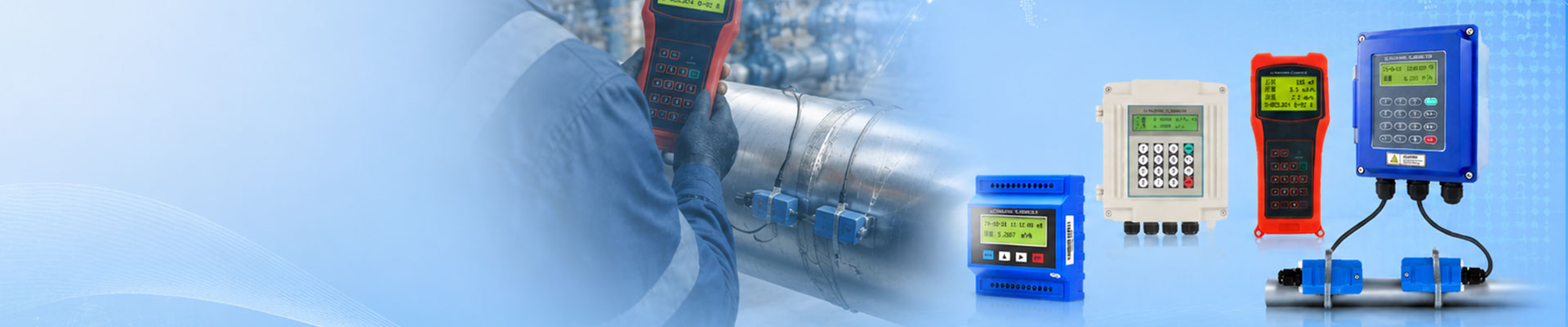
Ultrasonic meters use sound waves. Transit time models measure the time difference between upstream and downstream signals. Clamp-on models fit outside the pipe, so they work well for temporary flow surveys and retrofit jobs. We have quoted seawater flow meters for desalination plants in the Middle East and Southeast Asia. A customer in Vietnam asked us last year for a clamp-on ultrasonic meter on a DN250 seawater line. The flow range was 100 to 400 cubic meters per hour. We supplied a transit time meter with PT100 temperature input and 4-20 mA HART output.
Vortex meters count vortices shed by a bluff body. They handle steam, compressed air, and hydrocarbon gas. Inline vortex meters suit DN15 to DN300 pipes. Typical temperature rating goes up to 350 degrees C. Pressure rating reaches 40 bar depending on flange class. We often size these for steam boilers in food processing plants and chemical sites.
Oval gear meters belong to positive displacement. Two rotating oval gears trap a fixed volume. These meters deliver high accuracy for diesel, heavy fuel oil, and lubricants. They are not ideal for dirty water or gas. They need clean fluid with some viscosity. A paint manufacturer in Southeast Asia ordered oval gear flow meters for solvent batching. Batch volume was 200 liters. Accuracy was 0.5 percent of reading. Viscosity reached 800 cP.
Mass Flow Meter Principles in Plain Language
Coriolis mass flow meters measure mass directly. The meter vibrates one or two tubes. Fluid passes through the tubes. Mass flow creates a phase shift. The transmitter converts this shift into a mass flow reading. Because the meter also measures density and temperature, it can output concentration and volume flow at the same time. We supply Coriolis meters from DN3 up to DN150. Accuracy is 0.2 percent or 0.1 percent for mass flow. Process connections include tri-clamp, flange, and thread. Models with ATEX Zone 1 certification ar
Thermal mass flow meters work for gas. They place two PT100 sensors in the gas stream. One sensor is heated. The other reads reference temperature. The cooling effect gives a direct mass flow reading in kg/h or Nm3/h. Thermal insertion meters work well for compressed air, biogas, and flare gas. We have seen these on customer sites in food packaging and wastewater treatment plants. A site in Brazil wanted a thermal mass flow meter for biogas from an anaerobic digester. Gas pressure was 0.2 bar. Pipe size was DN100. Flow range was 50 to 300 kg/h. We supplied an insertion probe with 4-20 mA HART output.
Volumetric or Mass: How to Decide
Choose volumetric when the fluid density is stable and your process is controlled by volume. Water utilities, irrigation networks, and fuel oil batching often use electromagnetic, ultrasonic, or oval gear meters. Choose mass when the gas or liquid changes temperature, pressure, or composition. Chemical reactors, gas billing, and food recipes that use weight percentage need mass flow.
If you measure steam, vortex is a solid option. If you measure conductive water, electromagnetic is hard to beat. If you measure non-conductive oil, oval gear or Coriolis are the usual choices. For gas flow, thermal mass or vortex depend on the range and the need for mass units.
Data We Need for a Quote
Send us the fluid name, pressure in bar, temperature in degrees C, pipe size DN, and minimum and maximum flow range. Also tell us the output signal you need. Common outputs are 4-20 mA HART, pulse, RS485 Modbus, and digital display. For hazardous areas, state the zone classification. For seawater, tell us the salinity and the pipe material. For chemicals, state the concentration and viscosity.
We reply with a model recommendation, accuracy statement, wetted materials, and price. Contact Silver Automation Instruments by Tel: +86-25-68650347, Whatsapp: +86-25-52155837, or WeChat: +86 15365082610. We also supply pressure transmitters and paperless recorders for a complete metering loop.
FAQ
Question: What is the simplest way to explain the difference between volumetric and mass flow meters?
Answer: Volumetric meters measure the space a fluid occupies. Mass meters measure the actual material weight per unit time. Temperature and pressure changes affect volumetric readings more than mass readings.
Question: Which flow meter is best for seawater in a desalination plant?
Answer: Electromagnetic flow meters are common for seawater feed lines. Clamp-on ultrasonic meters work well for retrofit or temporary measurement. Send the pipe size and salinity for a specific model.
Question: Can one flow meter measure both mass flow and density?
Answer: Yes. A Coriolis mass flow meter measures mass flow, density, and temperature at the same time. That feature is useful for chemical batching and concentration monitoring.
Question: What size range can Silver Automation Instruments supply?
Answer: We cover DN3 to DN2000 depending on the technology. Small line sizes suit Coriolis and oval gear meters. Large water lines suit electromagnetic and ultrasonic meters.
Question: How do I get a price for a flow meter?
Answer: Send us your pressure in bar, temperature in degrees C, pipe size DN, and minimum and maximum flow. Also state the fluid and the output signal. Contact us by Tel: +86-25-68650347, Whatsapp: +86-25-52155837, or WeChat: +86 15365082610.