

『Clamp On Flow Meter Applications: Non-Destructive Testing Sizing Frameworks』Related information(v cone flow meter|rotary gas meter|gallon meter|gear meter|metal tube rotameter|glass tube rotameter|nutating disk meter|transit time ultrasonic flow meter|wedge flow meter|pd meters|hydraulic flow meter|ultrasonic water flow meter|water flow meter|air flow meter|magnetic water flow meter|oxygen flow meter|gas flow meter|argon flow meter|air velocity meter|gasoline flow meter|fuel flow meter|ultrasonic water meter|digital water meter|nitrogen flow meter|solid flow meter|Oxygen tank flow meter|digital water flow meter|diesel fuel flow meter|steam flow meter|02 flow meter|compressed air flow meter|oil flow meter|liquid flow meter)
Clamp On Flow Meter Applications: Non-Destructive Testing and Sizing Frameworks
Quick Answer: Clamp on flow meters measure flow from outside the pipe. No cutting, no welding, no process shutdown. The sizing framework that works in the field starts with pipe outer diameter, wall thickness, material, liner condition, fluid type, and temperature. Silver Automation Instruments uses this data to pair the right ultrasonic sensor set with your line size and flow range.
Where Clamp On Flow Meters Solve Real Industrial Problems
Clamp on ultrasonic flow meters fit best when a process cannot stop. They work on water lines, chilled water loops, cooling water, wastewater discharge, and chemical dosing lines. We have supplied them for a seawater reverse osmosis plant in Vietnam and a dairy plant in New Zealand. The sensor set sits on the outside of the pipe. The pipe stays intact.
Here is the thing. A clamp on meter is not a universal fit. It needs a pipe with a clean outside surface and a fluid that carries sound. Clean water, seawater, glycol, diesel, and some chemicals work well. Slurries with high gas content do not. Many engineers try to use clamp on meters on heavily aerated sludge lines and then blame the instrument. The real problem is the application.
Non-Destructive Testing Before You Size the Meter
Non-destructive testing in this context means you inspect the pipe without cutting it. First check the pipe material. Carbon steel, stainless steel, copper, PVC, and HDPE are common. Second check the wall thickness. Third check the liner. Some concrete-lined or rubber-lined pipes weaken the ultrasonic signal. You can still measure flow, but you may need a higher power sensor set.
We have seen this on customer sites many times. A water authority in Thailand had a DN500 steel pipe with a 12 mm cement mortar liner. A standard sensor set gave a weak signal. We moved to a larger sensor set with a lower frequency. The signal locked in. That is why the sizing framework includes liner type and thickness.
Sizing Frameworks That Work in the Field
Start with five data points. Pipe outer diameter in mm. Wall thickness in mm. Pipe material. Fluid type. Flow range in m3/h or L/min. Then add temperature and pressure if the line runs above 80 °C or above 20 bar. The meter electronics need this data before you order.
In practice, Silver Instruments engineers follow a simple sequence. For pipe sizes from DN25 to DN100, a compact clamp on sensor set works for clean water and low temperature. For DN100 to DN600, we check the wall thickness and liner. For DN600 to DN6000, we often recommend a dual path sensor set or a large pipe sensor set. The larger sensor set sends a stronger signal across the wide diameter. If the line runs at 120 °C, we specify a high temperature sensor set. If the fluid is seawater, we ask about the grounding and the pipe exterior. Because a rusty pipe outside can degrade the acoustic coupling.
Model Selection and Parameters to Send Us
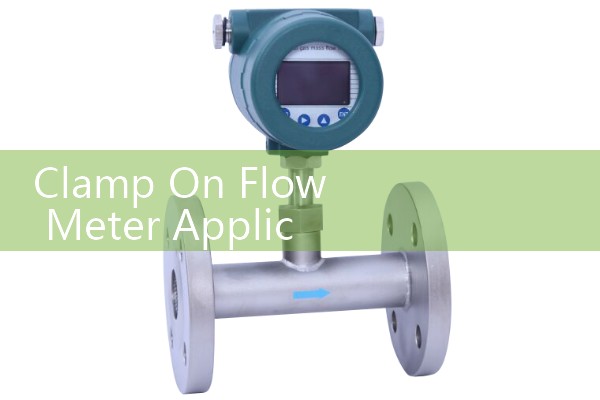
Silver Instruments supplies clamp on ultrasonic flow meters with 4-20 mA HART output, RS485 Modbus, and options for ATEX Zone 1. Accuracy on a properly installed meter is typically 1.0 p
We recommend a separate sensor set for temporary verification jobs. This helps a plant compare a clamp on meter against an existing magnetic flow meter or vortex meter. In one project in Oman, a contractor used our portable clamp on meter to verify a Coriolis meter on a diesel line. The difference was under 0.8 percent. That gave the plant confidence without cutting the pipe.
Installation Notes That Prevent Rework
Most engineers skip this part. They install on a short straight run and accept bad readings. The result is a flow total that drifts. Do not install the sensor set on a downward flow section with a partially full pipe. Choose a straight run of 10 pipe diameters upstream and 5 pipe diameters downstream. For a DN200 line, that means 2 meters upstream and 1 meter downstream. Clean the pipe surface to bare metal if possible. Use ultrasonic coupling gel or pads. Do not install sensors over a weld seam or a flange. These steps are simple, but most installation failures come from ignoring them.
Because many plants in the Middle East and Southeast Asia run outdoor piping, the sensor set should be rated for direct sunlight. Ask for an IP68 sensor body if the line is buried or exposed to monsoon rain. We keep stock of IP68 clamp on sensor sets for water and wastewater jobs.
FAQ: Five Questions Engineers Ask About Clamp On Flow Meter Applications
Can a clamp on flow meter measure diesel or fuel oil?
Yes, if the fluid is clean and the pipe is full. Diesel and light fuel oil have lower acoustic conductivity than water. The signal path needs a higher gain setting. Send us the API gravity or viscosity in cP. We will specify the right sensor frequency.
What is the minimum straight pipe length for a clamp on meter?
Use 10 pipe diameters upstream and 5 downstream. For a DN80 line, that is 800 mm upstream. If you have less space, a dual path sensor set can reduce the error from swirl. But do not go below 5 upstream diameters without contacting us first.
Does wall thickness change the sizing framework?
Yes. Wall thickness above 25 mm weakens the signal on standard sensors. We switch to a larger sensor set and a lower frequency. Send the exact wall thickness from an ultrasonic thickness gauge. Do not estimate from a pipe schedule alone.
Can I use a clamp on meter on a cement-lined pipe?
Sometimes. Thin cement liners work. Thick or poorly bonded liners scatter the signal. We have seen working installations on 12 mm liners, but each case needs a field test. We can send a trial sensor set for a site check.
What information do you need for a price quote?
Send the pipe outer diameter, wall thickness, material, fluid type, flow range, temperature, and pressure. A photo of the installation point also helps. We reply with a model selection within one business day. Call Tel: +86-135-1213-1526 or WhatsApp 86-135-12131526. WeChat is +86 13512131526. Or visit flow-meter.com.au.
 Hot Product
 Related AD