

『Flow Meter Data Logger Setup: Remote Wireless Telemetry for Environmental Water Monitoring』Related information(v cone flow meter|rotary gas meter|gallon meter|gear meter|metal tube rotameter|glass tube rotameter|nutating disk meter|transit time ultrasonic flow meter|wedge flow meter|pd meters|hydraulic flow meter|ultrasonic water flow meter|water flow meter|air flow meter|magnetic water flow meter|oxygen flow meter|gas flow meter|argon flow meter|air velocity meter|gasoline flow meter|fuel flow meter|ultrasonic water meter|digital water meter|nitrogen flow meter|solid flow meter|Oxygen tank flow meter|digital water flow meter|diesel fuel flow meter|steam flow meter|02 flow meter|compressed air flow meter|oil flow meter|liquid flow meter)
Flow Meter Data Logger Setup Remote Wireless Telemetry for Environmental Water Monitoring
Quick Answer: For a flow meter data logger setup with remote wireless telemetry for environmental water monitoring, use a flow meter with 4-20 mA HART or pulse output, connect it to a battery powered data logger with 4G or NB-IoT telemetry, and publish the data to a SCADA or cloud portal. Silver Instruments supplies electromagnetic flow meters, ultrasonic flow meters, and paperless recorders that work together for this task. Send us your pipe size (DN), water conductivity (µS/cm), flow range (m3/h), pressure (bar), and temperature (°C) to get a model and price.
What the Setup Includes
Most environmental water monitoring sites are remote. A creek, a wetland drain, a desalination plant outfall, or a river intake can be far from mains power and fixed Ethernet. The field side typically has a flow meter, a data logger, a power supply, and a telemetry module. Some sites combine the data logger and telemetry in one paperless recorder. Silver Instruments supplies the flow meter and the paperless recorder with GPRS or 4G transmission.
In practice, one of the most common configurations we see in Southeast Asia and Oceania is an electromagnetic flow meter wired to a solar powered data logger. The logger records flow rate and total flow every 15 minutes and sends the data to a cloud platform once per hour. This balances data visibility and battery consumption.
Signal Wiring From the Flow Meter to the Data Logger
The flow meter output matters more than the brand. For environmental water, 4-20 mA HART is a safe choice because it carries the live flow rate and supports remote diagnostics. Many Silver Instruments electromagnetic flow meters include 4-20 mA HART plus pulse output. The pulse output is useful for total flow recording at the logger. If you need more than one parameter, use RS485 Modbus RTU. A single Modbus cable can carry flow rate, total flow, conductivity, and temperature from one flow meter to the logger.
Wire the 4-20 mA loop to the analog input of the data logger. Use shielded cable with the screen grounded at one end only. Do not ground the shield at both ends. This avoids ground loops that create a noisy signal. For pulse input, set the logger input to the same K-factor as the flow meter. A mismatch here will cause the total flow reading to be incorrect by 10 percent or more. We have seen this on customer sites many times.
Last year a customer in Vietnam wired a pulse output to a 0-10 V input on the logger. The flow total looked correct at high flow but drifted at low flow. We fixed this by moving the pulse signal to the dedicated pulse input and setting the K-factor.
Wireless Telemetry Options
For remote water monitoring, choose the network before choosing the logger. In Australia and New Zealand, 4G LTE Cat-M1 or NB-IoT works well for many rural water sites. In some Pacific islands, GPRS is still the only option. In mining or wetland sites with no mobile coverage, LoRa radio can bridge the signal from the logger to a gateway a few kilometres away.
A practical setting is a 15 minute logging interval and a 60 minute upload interval. This keeps a 12 V 7 Ah battery running for days without solar charging. If the site has a 20 W solar panel and a 12 V 7 Ah sealed lead acid battery, the system usually runs through a week of heavy cloud. In northern Queensland and Papua New Guinea, we advise a 30 W panel because the wet season can produce several cloudy days in a row.
Last year a water monitoring station near Cairns in North Queensland used a Silver Instruments electromagnetic flow meter, a SIL-Rec-4G logger, and a 20 W solar panel. The telemetry stayed online through two weeks of cloudy weather because the logging interval was 15 minutes and the upload interval was 60 minutes.
Recommended Silver Instruments Models
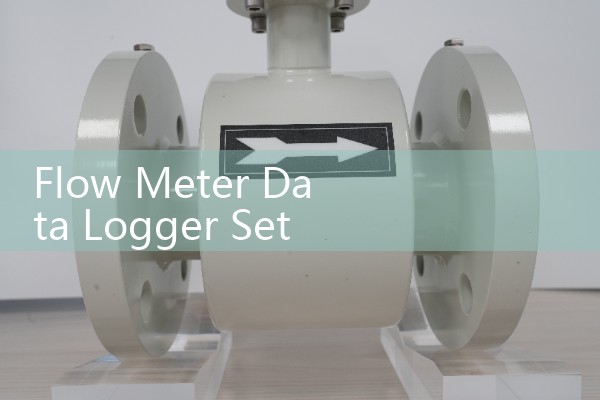
For raw water, river water, and wastewater effluent, we recommend the Silver Instruments electromagnetic flow meter model SIL-MAG-100 with PTFE liner and 3
For large open channels and pipelines where cutting the pipe is expensive, use the Silver Instruments clamp-on ultrasonic flow meter model SIL-UC-200. This model suits pipe sizes from DN25 to DN1200 and can be installed without stopping flow. It is a good fit for water transfer pipes in desalination plants and irrigation mains.
For the logging side, use the Silver Instruments paperless recorder model SIL-Rec-4G with three analog inputs and one Modbus input. It logs data to an SD card and sends data via 4G or Ethernet. The recorder accepts 4-20 mA, 0-10 V, pulse, and Modbus RTU signals. This gives you one device for flow rate, total flow, pressure, and temperature.
Common Installation Mistakes We See in the Field
One mistake is setting the low flow cutoff too low. A small leak of 0.05 m/s then appears as real flow. Another mistake is not clearing the totalizer before the first run after commissioning. The site report then shows a total flow that is higher than the actual monthly volume.
Grounding is another issue. An electromagnetic flow meter needs a good ground connection to the process water. Poor grounding causes the display to jump by 10 to 20 percent. Use grounding rings in plastic pipes or place the electrode plane correctly. The manufacturer installation guide shows the correct ground point for each liner material.
Do not forget to synchronize the logger clock to UTC or local standard time. This matters when several sites report to the same SCADA system. A 15 minute offset can make a rain event look like it happened before the flow peak. In practice, most engineers skip this part until they see a confusing hydrograph at midnight.
FAQ
Question: Which flow meter is better for environmental water, electromagnetic or ultrasonic?
Answer: Use an electromagnetic flow meter when the water has enough conductivity, normally above 5 µS/cm. Use a clamp-on ultrasonic flow meter when you cannot cut the pipe or when the water is very clean and conductivity is low. Silver Instruments supplies both types.
Question: Can the data logger work with battery and solar power only?
Answer: Yes. A 12 V 7 Ah battery and a 20 W to 30 W solar panel can power many Silver Instruments loggers with a 15 minute logging interval and hourly upload. Confirm the exact power budget after you send the sensor list and telemetry interval.
Question: What signal should I use for total flow?
Answer: Pulse output is the simplest for total flow if the data logger has a pulse input. For multi-parameter reporting, use RS485 Modbus RTU. For live flow rate only, 4-20 mA HART is reliable and easy to maintain.
Question: How do I size a flow meter for a creek or drain?
Answer: Measure the minimum and maximum flow rate in m3/h. Choose a meter so normal flow runs between 0.5 m/s and 3 m/s. Send us your pipe size (DN), minimum flow, maximum flow, and water level. We will recommend a model and a price.
Question: Can Silver Instruments help with remote commissioning in our country?
Answer: Yes. We support customers in Southeast Asia, Oceania, Latin America, Africa, and the Middle East. We can check your wiring, logger settings, and remote data by WhatsApp video or WeChat before site startup.
How to Get a Quote
Silver Automation Instruments is a flow meter manufacturer and supplier for water and wastewater projects. Send us the following details: pipe size (DN), water type (river, wastewater, desalinated water), conductivity (µS/cm), minimum and maximum flow rate (m3/h), pressure (bar), temperature (°C), and the required telemetry network (4G, NB-IoT, LoRa). We will send a recommended flow meter, data logger, and a price quote.
Contact Silver Automation Instruments.
Tel: +86-25-68650347
Whatsapp: +86-25-52155837
WeChat: +86 15365082610
 Hot Blog
 Related AD