

『Flow Meter Connection to Plc Integration: Programming 4-20mA Analog and Modbus Inputs』Related information(v cone flow meter|rotary gas meter|gallon meter|gear meter|metal tube rotameter|glass tube rotameter|nutating disk meter|transit time ultrasonic flow meter|wedge flow meter|pd meters|hydraulic flow meter|ultrasonic water flow meter|water flow meter|air flow meter|magnetic water flow meter|oxygen flow meter|gas flow meter|argon flow meter|air velocity meter|gasoline flow meter|fuel flow meter|ultrasonic water meter|digital water meter|nitrogen flow meter|solid flow meter|Oxygen tank flow meter|digital water flow meter|diesel fuel flow meter|steam flow meter|02 flow meter|compressed air flow meter|oil flow meter|liquid flow meter)

Flow Meter Connection to PLC Integration: Programming 4-20mA Analog and Modbus Inputs
Quick Answer: Wire the flow meter 4-20 mA output to a PLC analog input card. Program the PLC to scale the raw current signal into engineering units such as m³/h, kg/h or L/min. For Modbus flow meters, connect RS485 A and B to the PLC serial port or use Modbus TCP over Ethernet. Read flow rate, totalizer and diagnostics registers with Function Code 03 or 04.
Silver Automation Instruments ships electromagnetic, vortex, ultrasonic and Coriolis flow meters with 4-20 mA, HART and Modbus outputs. Send us your fluid, pipe size, flow range, pressure and temperature. Tel: +86-25-68650347. Whatsapp: +86-25-52155837. WeChat: +86 15365082610.
Why Flow Meter PLC Integration Matters
PLC integration turns a flow meter reading into control actions. A dosing pump starts. A valve opens. A batch stops. Without proper wiring and scaling, the PLC receives current but not flow. Most PLC systems in water plants, chemical skids and food lines use either 4-20 mA analog signals or Modbus data. Both are reliable when wired correctly.
We have seen customer sites in Southeast Asia and the Middle East where bad grounding caused unstable signals. The problem was not the flow meter. The problem was the PLC input wiring. A shielded twisted pair cable solved the issue quickly.
4-20 mA Analog Wiring from Flow Meter to PLC
Use a 24 V DC power supply for a standard 4-20 mA loop. Connect the flow meter positive terminal to the PLC analog input channel. Connect the negative terminal to the PLC common or the power supply negative depending on the module type. If the PLC input is a current sinking module, follow the analog card wiring diagram.
For a passive flow meter output, the loop power goes from the DC supply through the flow meter to the PLC input. For an active flow meter output, the flow meter supplies the loop current. Most Silver Instruments flow meters offer passive 4-20 mA and can be loop powered.
Use 0.75 mm² shielded twisted pair cable for 4-20 mA loops. In noisy areas, ground the shield at one end only, usually at the PLC cabinet. Do not ground the shield at both ends because this creates a ground loop. Keep signal cables away from variable frequency drives and motor cables.
For hazardous areas, check the flow meter certificate. Silver Instruments can supply ATEX Zone 1 or Zone 2 versions for gas and chemical plants. The analog loop must follow intrinsic safety barriers if the PLC side is in a safe area.
PLC Programming for 4-20 mA Analog Input
PLC analog input cards convert 4-20 mA into raw counts. The raw count range depends on the PLC brand. A Siemens S7-1200 or S7-1500 analog input gives 0 to 27648 for 4-20 mA. An Allen-Bradley 1769-IF4 module may give 3277 to 16384. A Mitsubishi FX5U analog input gives 0 to 4000. Check the card manual before scaling.
Scale the raw value into engineering units with this formula:
Engineering value = ((raw - raw_min) / (raw_max - raw_min)) x (EU_max - EU_min) + EU_min
Example: A Silver Instruments electromagnetic flow meter on DN80 pipe sends 4-20 mA for 0 to 100 m³/h. At 12 mA, a Siemens PLC shows 13824 raw counts. The engineering value is ((13824 - 0) / (27648 - 0)) x (100 - 0) + 0 = 50 m³/h. This is a simple linear scaling block in TIA Portal, Studio 5000 or GX Works3.
Add filtering in the PLC program. A 0.5 to 1 second moving average reduces pump noise and signal ripple. For batching, set a faster scan time. For totalizer display, filter more. Also program alarm limits. If the analog signal drops below 3.8 mA or rises above 20.5 mA, the loop is open or shorted. The PLC can trigger a maintenance alarm.
Modbus RTU and Modbus TCP Wiring
Many Silver Instruments flow meters include RS485 Modbus RTU as standard. Use two wire RS485: terminal A to PLC A, terminal B to PLC B. Some data sheets label them as D+ and D-. Always match the polarity. Connect the shield to earth at one end. Use 120 ohm termination resistors at both ends of the RS485 bus.
Set the same baud rate, data bits, parity and stop bits on the flow meter and the PLC. Common settings are 9600 baud, 8 data bits, no parity and 1 stop bit. Silver Instruments flow meters often ship with 9600 8N1 as default. For Modbus TCP, connect the flow meter Ethernet port to the PLC network switch. Use port 502. Siemens S7-
Do not star-wire RS485. Use a daisy chain from flow meter to flow meter. In a panel with a VFD, use shielded RS485 cable and keep it away from motor output cables.
PLC Programming for Modbus Inputs
The PLC acts as a Modbus master or client. The flow meter is the Modbus slave or server. Write a polling routine that reads the flow rate register every 1 to 2 seconds. For Modbus RTU, use Function Code 03 or 04. Flow rate is often a 32-bit float across two consecutive registers. Read totalizer and temperature registers in the same request if the flow meter supports block reads.
Register order can be reversed on some PLC platforms. If the flow rate value looks wrong, swap the high and low words. In TIA Portal, a Modbus read of a float may need a SWAP instruction. In Studio 5000, the Modbus client AOI often has a byte swap option. Always test with a known flow or a simulator.
Program a watchdog timer. If the PLC does not receive a valid Modbus response within 3 seconds, set an alarm. This detects cable breaks, power loss and wrong slave addresses. A flow meter with Modbus also gives more data than 4-20 mA: flow rate, totalizer, empty pipe detection and electronics temperature.
Recommended Silver Instruments Flow Meters for PLC Integration
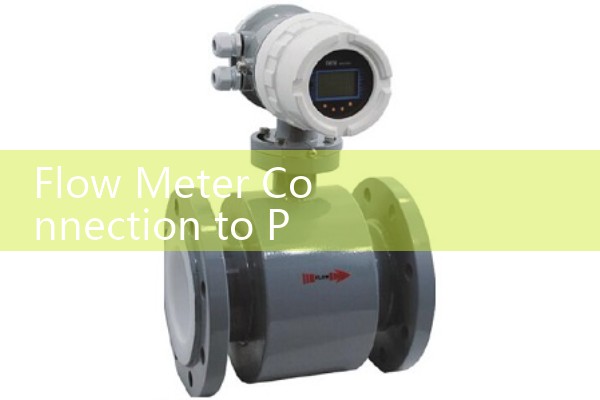
For water, wastewater and chemical dosing, use the Silver Instruments electromagnetic flow meter. It covers DN15 to DN300, pressure up to PN40 and temperature up to 80 °C. Outputs include 4-20 mA, pulse, RS485 Modbus RTU and HART. Accuracy is ±0.5% of reading. It works well for clean water, wastewater, acids and slurries with conductivity above 5 µS/cm.
For oil, syrup, molasses and viscous food products, use the Silver Instruments Coriolis mass flow meter. It measures mass flow, density and temperature. DN15 to DN80. Pressure up to 100 bar. Accuracy ±0.2%. Outputs include 4-20 mA HART and Modbus RTU. It handles viscosity up to 100 cP on standard models. It is a good choice for batching and custody transfer.
For steam, compressed air and gas, use the Silver Instruments vortex flow meter. DN15 to DN200. Temperature up to 250 °C. Outputs include 4-20 mA and Modbus RTU. It works for saturated steam and industrial gases. For retrofit jobs where pipe cutting is not possible, use the Silver Instruments clamp-on ultrasonic flow meter with 4-20 mA and Modbus.
A paint manufacturer in Vietnam used a Silver Instruments electromagnetic flow meter DN25 to control a chemical batching system. The PLC was a Mitsubishi FX5U. They read 4-20 mA for instantaneous flow and Modbus RTU for batch totalizer. The electrician finished the wiring in half a day. The loop was scaled to 0 to 5000 kg/h. No pulse output was needed.
FAQ
Q: Can I connect a 4-20 mA flow meter directly to a PLC analog input?
A: Yes. If the PLC analog input accepts 4-20 mA current, wire the loop with 24 V DC. Check if the module is active or passive. Match the positive and negative terminals to the flow meter manual.
Q: What Modbus registers should I read for flow rate?
A: It depends on the flow meter map. Silver Instruments flow meters store flow rate as a 32-bit float in two registers. Use Function Code 03. Check the manual for register addresses for flow rate, totalizer and status.
Q: How do I scale 4-20 mA into m³/h?
A: Use the raw count range of the PLC analog card. For Siemens, raw = 0 to 27648. Engineering value = ((raw - raw_min) / (raw_max - raw_min)) x (EU_max - EU_min) + EU_min. At 12 mA for a 0 to 100 m³/h range, the result is 50 m³/h.
Q: What cable length is safe for flow meter signals?
A: A 4-20 mA loop works up to 500 to 1000 meters with shielded twisted pair. RS485 Modbus RTU works up to 1200 meters at 9600 baud. Use 120 ohm termination at both ends for RS485.
Q: Which Silver Instruments flow meter works best for PLC integration?
A: Electromagnetic for conductive liquids. Coriolis for mass flow, density and viscous fluids. Vortex for steam and gas. All support 4-20 mA plus Modbus RTU or HART. Contact Silver Instruments with your process data.
Send Silver Instruments your fluid, flow range, pipe size, pressure and temperature. Tel: +86-25-68650347. Whatsapp: +86-25-52155837. WeChat: +86 15365082610. We recommend flow meter models with 4-20 mA, HART or Modbus output for your PLC system.
 Hot Blog
 Related AD