

 Current position > Product detail
『Electromagnetic Flow Meter Datasheet Overview: Specifications, Sizes, and Liners』Related information(v cone flow meter|rotary gas meter|gallon meter|gear meter|metal tube rotameter|glass tube rotameter|nutating disk meter|transit time ultrasonic flow meter|wedge flow meter|pd meters|hydraulic flow meter|ultrasonic water flow meter|water flow meter|air flow meter|magnetic water flow meter|oxygen flow meter|gas flow meter|argon flow meter|air velocity meter|gasoline flow meter|fuel flow meter|ultrasonic water meter|digital water meter|nitrogen flow meter|solid flow meter|Oxygen tank flow meter|digital water flow meter|diesel fuel flow meter|steam flow meter|02 flow meter|compressed air flow meter|oil flow meter|liquid flow meter)
Electromagnetic Flow Meter Datasheet Overview: Specifications, Sizes, and Liners
Quick Answer: A magnetic flow meter datasheet normally covers measuring range, accuracy, line size, liner material, electrode material, output signals, and process pressure limits. Silver Instruments supplies electromagnetic flow meters from DN10 to DN3000 for water, wastewater, acids, slurries, seawater, and food-grade liquids. Send your pipe size (DN), flow range, fluid type, temperature, and pressure to get a datasheet-matched quote.
Why the Datasheet Is the First Check for Engineers
Most instrumentation engineers start with the datasheet before they compare brands. They look at minimum conductivity, liner material, electrode material, and flange rating. A meter may look fine in a brochure, but the datasheet tells you if it will survive your process. We have seen this on customer sites in Vietnam and the Philippines, where cooling water lines and chemical dosing lines need different liners and grounding rings.
In practice, a datasheet also shows what the manufacturer hides in the fine print. Watch for accuracy at low flow, temperature derating, and empty pipe detection.
Specifications That Matter
Silver Instruments electromagnetic flow meters are available with accuracy of 0.5 percent or 0.2 percent of reading depending on the converter. The standard excitation is pulsed DC. Minimum fluid conductivity is 5 µS/cm for most models, and some versions can handle 20 µS/cm for demineralized water. Process temperature ranges from -25 °C to 150 °C for PTFE liners and up to 80 °C for rubber liners. Pressure ratings cover PN10, PN16, PN25, PN40, and ANSI 150 lb or 300 lb flanges.
Output options include 4-20 mA, pulse, RS485 Modbus, and HART on the remote or compact converter. Power supply can be 220 V AC, 24 V DC, or battery powered for remote sites. Most water and wastewater customers order 24 V DC with Modbus because their PLC cabinet already has a DC bus.
Line Sizes and Flow Ranges
Silver Instruments builds electromagnetic flow meters from DN10 to DN3000. The small sizes DN10 to DN25 work for dosing chemicals, food additives, and pilot plants. DN50 to DN300 covers most plant utility lines, wash water, and effluent flows. DN350 to DN600 handles large transfer lines in desalination plants and district cooling systems. Above DN600 up to DN3000, we supply wafer or flanged designs for raw water intake and irrigation canals.
Flow range depends on velocity. The recommended velocity is 0.3 to 10 m/s. A DN100 meter may measure from 2 to 282 m³/h depending on the liner and converter settings. A DN200 meter can cover 11 to 1130 m³/h. We send a sizing chart with every quote because one size does not fit all slurries and viscous fluids.
Here is the thing. Many users pick a meter size equal to the pipe size. That works for clean water, but it is not always right for chemicals with low velocity or abrasive slurry. In those cases, a DN80 meter on a DN100 pipe can give better accuracy and longer liner life.
Liner and Electrode Selection
The liner is the wetted surface that protects the meter body and keeps the signal stable. Silver Instruments offers rubber liners for water and wastewater from 0 to 80 °C. PTFE liners handle acids, alkalis, and solvents from -25 °C to 150 °C. PFA liners suit food-grade liquids and high purity water because they resist sticking and are easy to clean. Polyurethane liners are an o
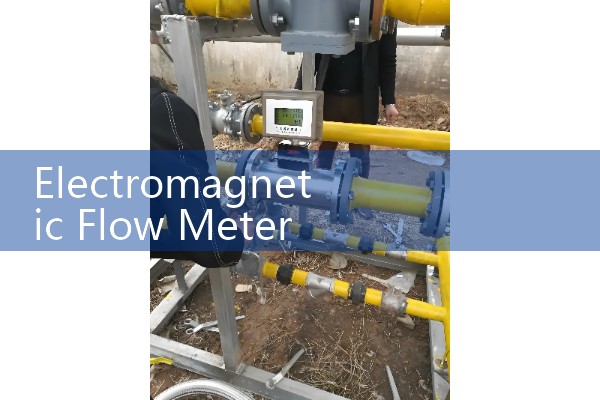
Electrode materials include 316L stainless steel for water and mild chemicals, Hastelloy C for acids and seawater, titanium for chlorinated brine, and tantalum for strong hydrochloric acid service. Platinum electrodes work for some high temperature and aggressive chemical applications. Desalination plants often choose titanium electrodes with PTFE liners for seawater feed lines.
Last year a customer in Saudi Arabia asked for a seawater flow meter for a desalination pilot plant. They sent the conductivity, temperature, and chloride level. We quoted a DN80 PTFE-lined meter with titanium electrodes and a grounding ring. That solved the corrosion risk and the signal noise problem.
Most engineers skip this part. Check the grounding ring.
How to Read the Datasheet Without Missing Details
Check the minimum fluid conductivity first. If the liquid is below 5 µS/cm, a standard electromagnetic meter will not work. Next, look at the liner and electrode combination for your fluid. Do not rely only on the sales name of a chemical. Send the full chemical formula or MSDS to the manufacturer. Then verify the process pressure and temperature limits together, because liner temperature limits drop when pressure is high.
Also look at the ingress protection and the cable length for remote converters. A compact meter is easier to install, but it can be hard to read in a flooded pit or direct sunlight. A remote converter with IP68 sensor and a 10 meter cable works better in those sites. We have supplied remote versions for wastewater plants in Indonesia and Mexico where the meters sit in deep chambers.
Contact and Quote Information
For a quick quote, send your pipe size (DN), flow range, fluid type, temperature, pressure, and output signal preference to Silver Automation Instruments. You can reach our sales engineers by phone at +86-25-68650347. Whatsapp is +86-25-52155837 and WeChat is +86 15365082610. We reply within one business day with a datasheet, a sizing check, and a price range.
Electromagnetic Flow Meter Datasheet FAQ
What is the minimum conductivity for a magnetic flow meter?
Most Silver Instruments meters need at least 5 µS/cm. Some versions can work down to 20 µS/cm for demineralized water, but you should confirm the exact sensor and converter combination.
Which liner is best for wastewater?
Rubber liners work well for municipal wastewater and sludge at temperatures up to 80 °C. For wastewater with oils, solvents, or wider temperature swings, PTFE or PFA liners give better chemical resistance.
Can I install an electromagnetic flow meter in a short straight run?
Yes, but you need to keep the meter full of liquid. Silver Instruments recommends at least 5D upstream and 2D downstream for most models. For tight spaces, a compact meter with factory calibration can reduce the required straight run.
Do you supply electromagnetic flow meters for seawater desalination?
Yes. We offer PTFE or PFA liners with titanium electrodes and grounding rings for seawater, brine, and RO feed lines. Send the chloride concentration and temperature to confirm the electrode grade.
What output signals are available on the datasheet?
Standard options are 4-20 mA, pulse, RS485 Modbus, and HART. Battery powered versions with wireless or local display are also available for remote water distribution sites.