

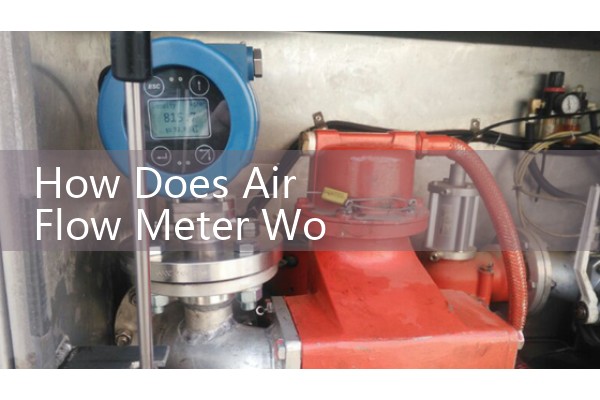
『How Does Air Flow Meter Work: Senses temperature shifts across a heated wire to calculate ambient air mass intake.』Related information(v cone flow meter|rotary gas meter|gallon meter|gear meter|metal tube rotameter|glass tube rotameter|nutating disk meter|transit time ultrasonic flow meter|wedge flow meter|pd meters|hydraulic flow meter|ultrasonic water flow meter|water flow meter|air flow meter|magnetic water flow meter|oxygen flow meter|gas flow meter|argon flow meter|air velocity meter|gasoline flow meter|fuel flow meter|ultrasonic water meter|digital water meter|nitrogen flow meter|solid flow meter|Oxygen tank flow meter|digital water flow meter|diesel fuel flow meter|steam flow meter|02 flow meter|compressed air flow meter|oil flow meter|liquid flow meter)
How Does an Air Flow Meter Sense Temperature Shifts Across a Heated Wire to Calculate Ambient Air Mass Intake
Quick Answer: A thermal mass air flow meter passes current through a heated wire or heated sensor. The moving air cools the heated element. The cooling effect changes with air mass flow. The transmitter converts this temperature shift into a mass flow reading in kg/h or standard volume units. No separate pressure or temperature compensation is needed.
Silver Automation Instruments supplies thermal mass flow meters for air, nitrogen, biogas, and natural gas. The meters work in compressed air lines, aeration blowers, burner air intake systems, and many process gas applications.
Heated Wire Sensing Principle
A thermal mass air flow meter uses two sensors. One sensor is heated. The other sensor is a reference PT100 that measures the gas temperature. Air flows across the heated sensor and removes heat. The circuit increases or decreases heating power to keep the heated sensor at a set temperature above the reference sensor. That power signal is proportional to air mass flow.
Here is the thing. The sensor does not measure velocity alone. It measures the cooling effect. Cooling effect depends on the number of air molecules touching the heated wire. Because of that, the signal reflects mass flow directly. A pressure change at the same volumetric flow will not produce a false high or false low reading.
Why Mass Flow Matters More Than Volumetric Flow
Compressed air and combustion air systems often use volume units in standard conditions. But actual line pressure and temperature change throughout the day. Volumetric flow readings drift even when the actual air mass stays the same. A thermal mass flow meter avoids this problem. The output already represents mass flow. This helps plant engineers compare air consumption across shifts without converting pressure and temperature data.
In practice, a customer in Vietnam told us his compressor test bench gave unstable volume readings during afternoon heat. He switched to a thermal mass flow meter with a local display. The readings became stable. That saved time because the test report no longer needed manual density correction.
Ambient Air Intake and Temperature Compensation
Ambient air temperature shifts affect many instruments. A thermal air flow meter handles ambient temperature through its reference sensor. The reference PT100 sits in the gas stream without heating. The heated sensor is held at a fixed differential above the reference temperature. For example, the differential may be 30 °C. On a cool morning in Australia or a hot afternoon in the Middle East, the electronics adjust heating power automatically.
We have seen this on customer sites many times. A wastewater plant with outdoor blowers may see air temperature move from 10 °C to 40 °C in one day. The thermal mass meter keeps the mass flow signal stable without external correction.
Model Selection and Output Options
Silver Instruments offers both insertion and inline thermal mass flow meters. Inline models cover pipe sizes from DN15 to DN50. Insertion models cov
Standard outputs include 4-20 mA HART and Modbus RTU. The display shows kg/h, standard cubic meters per hour, or normal liters per minute. Accuracy for air is typically 1.5 percent of reading plus 0.5 percent of full scale under stable process conditions.
Typical Applications in Target Regions
Our meters are installed in Australia, Mexico, Nigeria, Vietnam, and Saudi Arabia. A paint manufacturer in Southeast Asia uses one inline thermal mass flow meter on compressed air to spray booths. A dairy in Mexico measures air flow into a powder drying process. A gas supplier in Nigeria measures air flow to a flare knock out drum. Most sites ask for a 4-20 mA HART signal, a local display, and a flange or thread connection that matches existing pipework.
Installation Notes That Prevent Field Issues
Straight run matters. Place the sensor away from elbows, reducers, valves, and tees. For insertion probes, use a compression fitting or ball valve assembly. For inline meters, match the process connection and pipe inner diameter. If compressed air contains oil mist or water, install a coalescing filter upstream. A clean and dry gas stream gives stable readings and prevents sensor drift.
Most engineers skip this part. But a short straight run is the main reason we see inaccurate field readings. For a DN50 line, keep at least 15 pipe diameters upstream. For a DN100 line, more straight run is better.
Request a Quote with Specific Process Data
Send us your pressure in bar, temperature in °C, pipe size in DN, and flow range in kg/h. Tell us the gas type and the output you need. We will recommend a thermal mass flow meter from Silver Automation Instruments with the correct sensor length, process connection, and certification. Ask for price and lead time by phone or chat.
Contact Silver Automation Instruments. Tel: +86-25-68650347. Whatsapp: +86-25-52155837. WeChat: +86 15365082610.
FAQ
Q: Does a thermal mass flow meter need pressure and temperature compensation?
A: No. The meter measures mass flow directly. The built in reference PT100 handles ambient temperature shifts.
Q: Can a thermal mass flow meter work with wet air?
A: Wet air can change the cooling effect and cause drift. Install a filter or coalescing filter upstream. For very wet gas, contact our team to check the application.
Q: What pipe sizes are supported?
A: Inline thermal mass flow meters cover DN15 to DN50. Insertion probes cover DN50 to DN300 and larger. Custom insertion lengths are available.
Q: Which outputs are available?
A: 4-20 mA HART is standard. Modbus RTU is an option. Some models also support pulse output.
Q: What is the typical lead time for an air flow meter?
A: Standard models ship in 2 to 4 weeks. ATEX Zone 1 versions may need 4 to 6 weeks. Confirm with our sales team after sending your process data.
 Hot News
 Related AD